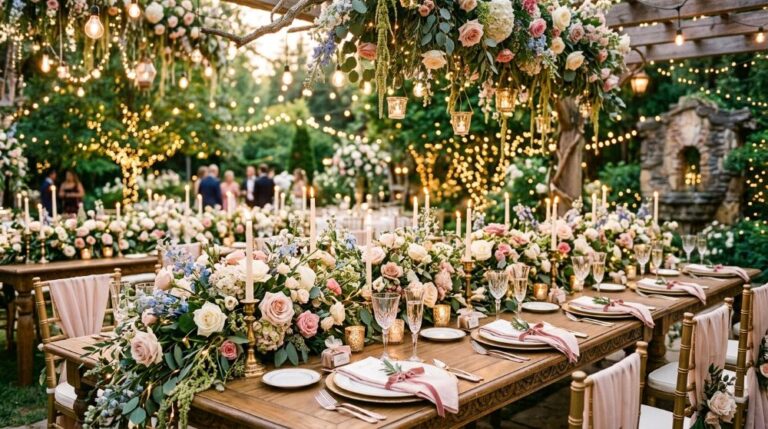
Your wedding invitation is often the first little glimpse guests get of your celebration. It can introduce the colors, mood, venue style, and personality you have planned for the big day before they ever arrive.
From delicate floral stationery and handmade paper to modern typography, vellum layers, wax seals, ribbons, and artistic illustrations, there are plenty of ways to make wedding invitation cards feel personal. You do not have to spend a fortune either. A simple card can look beautiful when the paper, colors, layout, and small finishing touches work together.
These 37 ideas range from classic and romantic designs to modern, rustic, minimalist, and destination-inspired options. Whether your wedding is intimate, formal, outdoors, or somewhere by the sea, you can find a card style that fits your celebration.
1. Elegant Floral Wedding Invitation Cards
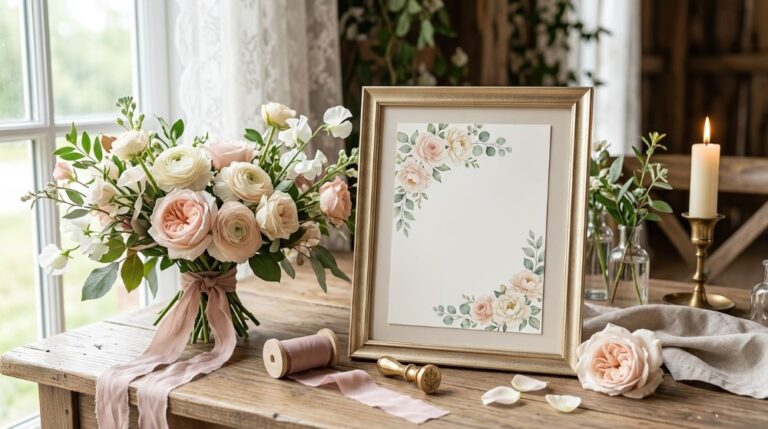
Floral wedding invitation cards are a timeless choice, but you can give them a more personal appearance by choosing flowers that match your wedding arrangements.
A cream or ivory background works beautifully with delicate watercolor flowers around the corners. Soft blush, dusty blue, sage, or muted peach can add color without making the card feel too busy.
For a more formal celebration, pair the floral artwork with classic typography and a clean border. For a relaxed garden wedding, use loose hand-painted flowers and greenery.
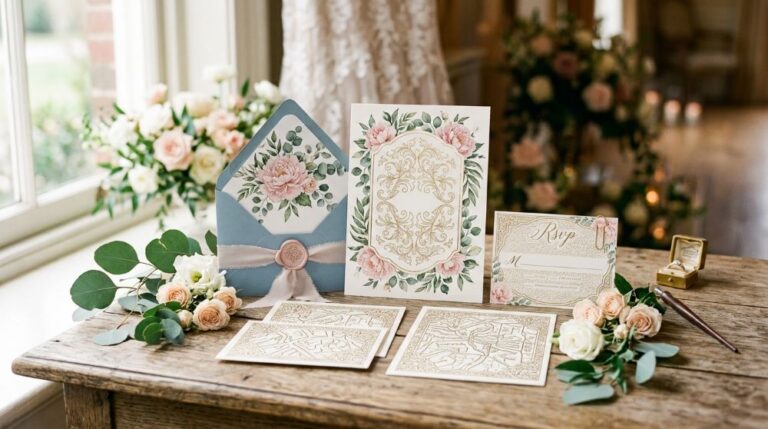
You can also carry the same floral artwork onto your RSVP card, envelope liner, and menu. This creates a coordinated stationery set without requiring every piece to look exactly the same.
If you are working with a limited budget, consider using floral artwork only on the main invitation while keeping the extra cards simple.
2. Minimalist Wedding Invitation Cards
Minimalist invitations prove that a simple layout can still feel luxurious. Start with a clean ivory, white, beige, or pale gray card and keep the design spacious.
Use one elegant font for the names and a smaller readable font for the event details. A thin border or tiny decorative line can add structure without making the design feel crowded.
Minimal invitations are especially suitable for modern venues, city weddings, intimate ceremonies, and couples who prefer understated stationery.
Paper quality makes a big difference here. Even with very little decoration, thick textured cardstock can make the finished invitation feel special.
You can also use a matching envelope in a slightly darker neutral shade to give the complete set more visual interest.
3. Handmade Paper Wedding Invitations
Handmade paper has natural texture and small variations that give wedding invitations a beautiful handcrafted quality.
Choose warm ivory, cream, or soft beige paper and pair it with simple typography. Small pressed flowers, deckled edges, or subtle botanical illustrations can add character.
These invitations are especially lovely for garden, countryside, rustic, and intimate weddings.
Because handmade paper can vary in thickness, check with your printer before ordering a large batch. Some papers may work better with certain printing methods than others.
For a simple DIY version, purchase handmade sheets and add printed invitation details using a home printer that can handle thicker stock.
4. Vellum Wedding Invitation Cards
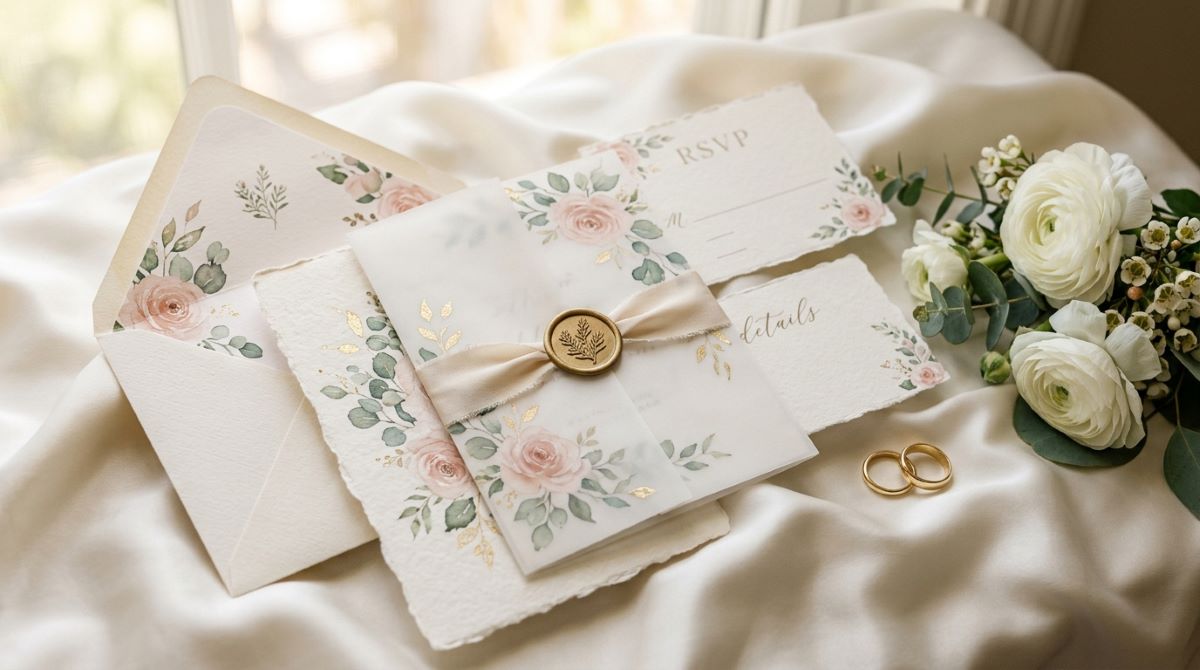
Vellum creates a soft translucent layer that can make an invitation feel delicate and romantic. Place the main invitation underneath and use a vellum sheet as the decorative top layer.
You can print names, floral artwork, or a simple monogram on the vellum. Secure it with a silk ribbon, wax seal, or small paper band.
Vellum looks particularly beautiful over floral illustrations because the underlying artwork remains softly visible.
For a polished appearance, keep the colors neutral and let the transparency become the main design feature.
5. Acrylic Wedding Invitations
Acrylic invitations offer a modern alternative to traditional paper stationery. Clear or frosted acrylic can be paired with white, gold, black, or soft colored lettering.
This style works especially well for contemporary weddings, glamorous receptions, and modern venues.
Because acrylic is rigid, think about packaging before ordering. A padded envelope or protective sleeve can help prevent scratches during delivery.
If a full acrylic invitation is outside your budget, you can use a small acrylic insert alongside a traditional paper invitation. This gives you the modern appearance without making the entire stationery set acrylic.
6. Wax Seal Wedding Invitations
Wax seals can make even a simple invitation feel thoughtfully finished. Choose a seal that reflects your initials, wedding date, floral theme, or another meaningful symbol.
Pair the seal with textured ivory paper, handmade paper, or vellum. Classic shades such as cream, burgundy, sage, dusty rose, and muted gold work beautifully.
For mailing, consider placing the sealed invitation inside an outer envelope so the wax does not get damaged by postal handling.
You can also use the same seal on your thank-you cards and other stationery after the wedding.
7. Ribbon-Tied Wedding Invitations
A soft ribbon can turn a simple stationery set into something more decorative. Stack the invitation, RSVP card, and details card together, then tie them with silk or satin ribbon.
Ivory, champagne, dusty pink, sage, terracotta, and pale blue are beautiful choices.
For a more relaxed wedding, try raw cotton or linen ribbon. For a formal celebration, silk ribbon gives a smoother appearance.
Keep the ribbon fairly narrow so it does not overpower the invitation design. A tiny floral sprig or personalized tag can also be tucked beneath the knot.
8. Vintage-Inspired Wedding Invitation Cards
Vintage-style invitations can use antique-inspired borders, old-fashioned typography, botanical drawings, or muted colors.
Try cream paper with faded blue, olive, brown, or burgundy accents. A slightly aged paper texture can make the design feel like a treasured keepsake.
This style works particularly well for historic venues, countryside weddings, and celebrations with traditional details.
You can also use an old-style illustration of your venue or a meaningful location as the central artwork.
Keep the wording easy to read even when using decorative fonts. A beautiful vintage design should still make the practical information clear.
9. Rustic Wedding Invitation Cards
Rustic invitations pair beautifully with outdoor and countryside weddings. Think kraft paper, warm cream cardstock, botanical drawings, wood-inspired textures, and earthy colors.
Sage green, terracotta, beige, brown, and muted ivory create a natural palette.
You can add a simple twine tie or a small dried-flower detail for extra texture.
For a budget-friendly approach, choose a printed kraft-paper design rather than adding several physical materials. A simple layout can still feel warm and personal when the colors and paper texture work together.
10. Black and White Wedding Invitations
Black and white invitations create a clean, timeless appearance. Use white or ivory cardstock with black typography and perhaps one simple line drawing.
A black envelope can make the stationery set feel even more polished.
For formal weddings, combine elegant serif typography with generous spacing. For modern celebrations, use a clean sans-serif font.
You can add a small monogram or thin border without taking away from the simplicity.
This color combination also photographs beautifully when styled with rings, silk ribbon, candles, or flowers.
11. Blush Pink Wedding Invitation Cards
Blush pink is a soft choice for romantic wedding stationery. Use blush as the background or as a small accent around the edges.
Pair it with ivory, champagne, taupe, or muted gold. Watercolor flowers or a delicate monogram can add personality.
If you are worried about the invitation looking too sweet, balance the pink with neutral typography and plenty of white space.
A blush envelope can complete the look without requiring extra decoration on the card itself.
12. Blue and White Wedding Invitations
Blue and white stationery can feel crisp, elegant, and timeless. Choose from dusty blue, powder blue, navy, or muted slate depending on the wedding style.
For a coastal celebration, use pale blue with seashell or watercolor botanical artwork. For a formal wedding, navy typography on ivory paper creates a sophisticated appearance.
You can also use blue envelope liners to introduce more color while keeping the invitation itself neutral.
This palette works particularly well for spring, summer, and seaside celebrations.
13. Green Botanical Wedding Invitations
Botanical invitations are perfect for nature-inspired celebrations. Use delicate leaves, vines, olive branches, eucalyptus, or other greenery around the edges.
A warm ivory background with sage and muted green artwork creates a soft natural appearance.
For a more modern look, use a single large botanical illustration rather than many small elements.
You can carry the greenery theme into your envelope liner and RSVP card for a cohesive stationery collection.
14. Gold Foil Wedding Invitations
Gold foil can add a luxurious finish to wedding stationery. Use it for names, borders, monograms, or tiny decorative elements.
Pair gold with ivory, cream, blush, black, or deep green.
You do not have to cover the entire card in foil. A small amount around the couple’s names can make a strong visual statement.
If professional foil printing is outside your budget, metallic ink or a small gold sticker can create a similar warm effect.
15. Destination Wedding Invitation Cards
Destination wedding invitations can hint at the location before guests arrive. Include an illustration of the venue, local architecture, coastline, mountains, or another recognizable feature.
Use colors inspired by the destination. Beach weddings might use sandy beige and pale blue, while mountain celebrations could use pine green and warm cream.
A small illustrated map can also be included as a details card.
This gives guests a sense of the experience they are being invited to while keeping the stationery practical.
16. Garden Wedding Invitations
Garden wedding invitations can feature watercolor flowers, climbing vines, soft greenery, and delicate borders.
Choose a pale background such as ivory or warm cream, then add floral colors that match the ceremony arrangements.
Hand-painted artwork works especially well here because slight variations in flowers make the design feel natural.
You can also add a small illustration of your garden venue or ceremony arch.
17. Photo Wedding Invitations
A favorite engagement photograph can become part of your wedding invitation. Choose a photo with soft lighting and enough empty space for the invitation details.
Black-and-white photography works beautifully for formal stationery, while warm color photography can suit a relaxed celebration.
Avoid choosing a photo that is too busy because the wording should remain easy to read.
You can use the photograph only on the front while keeping the event information on a clean interior panel.
18. Monogram Wedding Invitations
A personalized monogram can become the main visual feature of your wedding stationery.
Combine the couple’s initials inside a circle, oval, crest, or simple geometric design. Use the monogram on the invitation, envelope, RSVP card, and menu for consistency.
Keep the rest of the design fairly simple so the monogram remains noticeable.
Gold, black, navy, sage, and muted rose are all beautiful choices depending on the wedding palette.
19. Letterpress Wedding Invitations
Letterpress printing creates a tactile impression in thick paper. The subtle indentation makes even a simple invitation feel luxurious.
Choose thick cotton paper in ivory, white, or soft neutral tones. Pair it with classic typography and minimal decoration.
Letterpress works particularly well for formal weddings and couples who appreciate beautiful paper details.
Because the printing method can cost more than standard printing, you can reserve letterpress for the main invitation and use regular printing for the additional cards.
20. Watercolor Wedding Invitations
Watercolor artwork gives invitations a soft artistic appearance. Flowers, landscapes, venue illustrations, and abstract washes can all work beautifully.
Use a light watercolor background with darker typography so the details remain readable.
You can match the artwork to your wedding flowers or use colors from your overall wedding palette.
A watercolor invitation can also become a keepsake after the wedding, especially when the artwork represents a meaningful place.
21. Modern Geometric Wedding Invitations
Geometric invitations offer a clean contemporary appearance. Use arches, circles, rectangles, lines, or overlapping shapes to create structure.
Neutral shades such as ivory, beige, charcoal, and muted rose work beautifully, while stronger combinations like black and cream can feel more dramatic.
Keep the typography simple and let the shapes provide the decoration.
This style works particularly well for modern venues, city weddings, and minimalist receptions.
22. Floral Border Wedding Invitations
A floral border can frame the invitation without taking attention away from the wording.
Use small flowers and leaves around the edges, leaving the center mostly open for the event details.
You can choose one flower style for a clean appearance or combine several flowers for a garden-inspired look.
A floral border also makes it easy to coordinate the invitation with the wedding bouquet and table stationery.
23. Bow Wedding Invitation Cards
A delicate bow can make wedding stationery feel feminine and romantic. Tie a small silk ribbon around the invitation suite or attach a bow directly to the card.
Soft ivory, blush, champagne, dusty blue, and sage are beautiful ribbon colors.
Keep the printed design simple when using a large bow. This allows the ribbon to become the main decorative feature.
For easier mailing, use a flat ribbon bow rather than a very large three-dimensional design.
24. Embossed Wedding Invitations
Embossing adds raised texture to selected parts of the invitation. Names, initials, borders, flowers, and small decorative patterns can all be embossed.
A white-on-white embossed design can look particularly elegant and understated.
For more contrast, combine embossed details with colored paper or metallic accents.
This style works beautifully when you want the invitation to feel luxurious without using lots of color.
25. Cottagecore Wedding Invitations
Cottagecore-inspired invitations can feature tiny wildflowers, soft gingham patterns, hand-drawn fruit, herbs, garden illustrations, or vintage-inspired typography.
Use warm cream, butter yellow, muted green, dusty pink, and pale blue.
A slightly imperfect hand-drawn style works better than perfectly symmetrical artwork for this type of celebration.
These invitations are especially fitting for garden ceremonies, countryside venues, and intimate weddings.
26. Pressed Flower Wedding Invitations
Pressed flowers can become a beautiful physical detail on handmade invitations. Use tiny flowers or leaves and attach them carefully to the stationery.
Keep the rest of the design simple so the flowers remain the main feature.
If real flowers are difficult to source or ship, printed botanical artwork can create a similar visual effect.
Pressed-flower invitations should be protected with an outer envelope or clear sleeve when mailing.
27. Marble Wedding Invitations
Marble patterns can create a sophisticated background without requiring many additional decorations.
Choose white marble with soft gray veins for a subtle appearance or use beige, blush, or muted green marble for something more distinctive.
Pair the pattern with simple typography and a small metallic accent.
Because marble artwork can become visually busy, keep the wording area clean and spacious.
28. Black and Gold Wedding Invitations
Black and gold create a dramatic formal combination. Use a black background with gold typography or keep the invitation ivory with black text and gold details.
A thin gold border, monogram, or foil names can add luxury without making the card feel excessive.
This palette works beautifully for evening weddings, formal receptions, and glamorous venues.
Use a lighter envelope interior if the invitation itself is very dark so the complete stationery set remains balanced.
29. Soft Neutral Wedding Invitations
Neutral stationery can feel incredibly elegant when several soft shades are layered together.
Try ivory, beige, taupe, champagne, and warm gray. Use subtle texture or a thin border to give the design structure.
This style is ideal if your wedding decor uses natural fabrics, candles, dried flowers, or soft neutral arrangements.
Neutral invitations are also easy to coordinate with different wedding colors because they do not compete with the rest of your stationery.
30. Custom Venue Illustration Invitations
Turn your wedding venue into the centerpiece of the invitation with a custom illustration.
It could be the front of a historic building, a garden, a church, a beach house, or another location that has meaning to you.
Keep the illustration detailed enough to be recognizable while leaving enough space for the invitation information.
This is a beautiful option for couples who want their stationery to feel connected to the actual place where they are getting married.
31. Illustrated Love Story Wedding Invitations
Tell a small part of your relationship through illustrations. You could feature the place you met, a favorite travel destination, your first home, or another meaningful location.
Use small drawings rather than filling the entire invitation with scenes.
A simple illustrated timeline can also work as a details card.
This approach makes the stationery feel personal and gives guests something interesting to look at beyond the basic event information.
32. Die-Cut Wedding Invitation Cards
Die-cut invitations can use unique shapes such as arches, circles, scallops, or curved edges.
An arched invitation can feel romantic, while a clean geometric shape works well for a modern wedding.
Choose thick cardstock so the unusual shape holds its form.
Keep the wording centered and avoid placing important details too close to the edges.
33. Envelope-Liner Wedding Invitations
Sometimes the invitation itself can stay simple while the envelope provides the visual surprise.
Choose a patterned liner featuring flowers, watercolor artwork, a venue illustration, or a custom monogram.
A neutral invitation paired with a colorful envelope liner creates a beautiful contrast.
This is also a budget-friendly way to add personality because you can keep the main card relatively simple.
34. Celestial Wedding Invitations
Celestial invitations can feature stars, moons, constellations, and subtle metallic details.
Use navy, midnight blue, cream, dusty lavender, or black as the main palette. Small gold stars can add a gentle shimmer.
Keep the celestial artwork refined rather than filling every area with stars.
This style works especially well for evening weddings and romantic candlelit receptions.
35. Handmade Deckled-Edge Invitations
Deckled edges give paper an organic handmade appearance. Pair them with soft typography and a neutral color palette.
Cream, ivory, beige, and pale blush work especially well.
You can add a simple ribbon, wax seal, or dried botanical detail.
Because the edges are naturally irregular, keep the rest of the design clean and structured for balance.
36. Luxury Velvet Wedding Invitations
Velvet can be introduced through an invitation pocket, ribbon, envelope, or decorative wrap.
Deep emerald, burgundy, navy, dusty rose, or champagne velvet can create a rich tactile appearance.
Keep the printed invitation itself relatively simple so the fabric becomes the main feature.
This idea is especially suitable for winter weddings, formal receptions, and evening celebrations.
37. Keepsake Wedding Invitation Cards
A keepsake invitation is designed to remain beautiful long after the wedding. Use thick textured paper, custom artwork, a meaningful monogram, or an illustration of the venue.
You could also add a small removable photo, pressed flower, or beautifully designed insert.
Choose timeless colors and typography so the invitation does not feel tied to a short-lived trend.
When guests receive something this thoughtfully designed, it can become a small reminder of your celebration rather than something they immediately put away.
Conclusion
The best wedding invitation cards are not always the most elaborate ones. A thoughtful color palette, beautiful paper, personal artwork, or one carefully chosen finishing detail can make a simple design feel memorable.
Whether you love floral stationery, handmade paper, elegant neutrals, modern acrylic, vintage artwork, or a custom venue illustration, choose a style that reflects the atmosphere you are creating for your wedding. When the invitation feels personal and beautifully made, it can become a keepsake guests are happy to hold onto.

Emma is the author and creative voice behind TheFashionary, sharing inspiring ideas on bridal fashion, wedding dresses, hairstyles, and timeless style. She loves discovering beautiful fashion trends and helping readers find inspiration for their special moments.