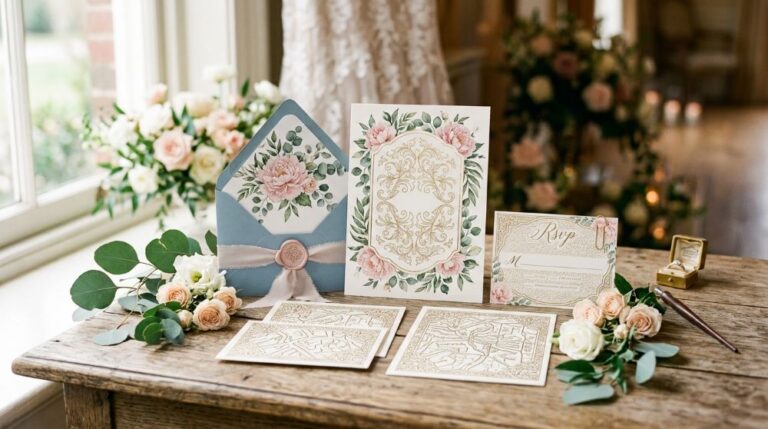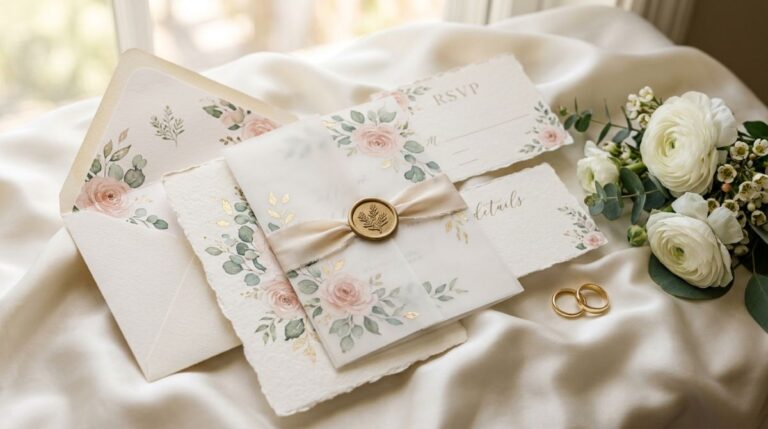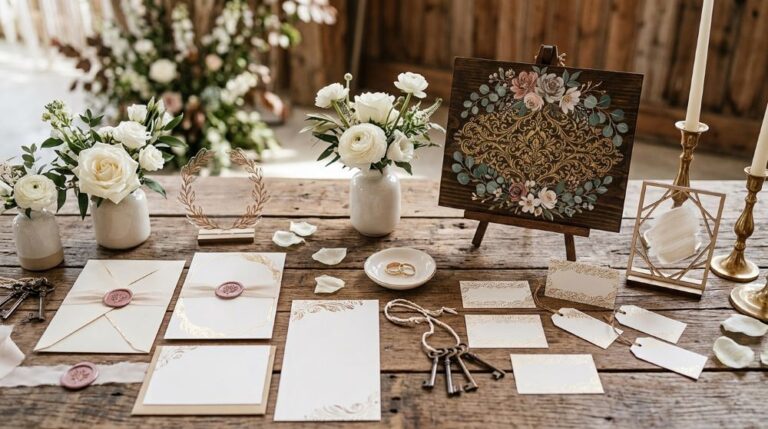
A beautiful wedding invitation deserves a frame that makes it stand out without taking attention away from the design itself. Whether you’re displaying your invitation at the reception, creating a keepsake for your home, or presenting it as part of your wedding décor, the right frame can turn a simple card into an elegant decorative piece.
The trick is to choose a frame that works with the invitation rather than competing with it. From the color and material to the size and overall style, every detail can help create a polished presentation that feels connected to your wedding.
Looking for a design that feels personal and memorable? These unique wedding invitation cards are full of creative inspiration.
Start With Your Invitation Style
Before choosing a frame, take a close look at your invitation. Think about its colors, patterns, typography, paper texture, and overall mood. The frame should complement these elements instead of introducing a completely different style.
For example, a traditional invitation with elegant lettering may look beautiful inside a classic gold or wooden frame. A modern invitation with clean lines may work better with a simple black, white, or metallic frame. If your invitation features delicate floral artwork, a soft neutral frame can allow those details to remain the focus.
Think of your invitation as the main feature and the frame as its supporting element.
Match the Frame to Your Wedding Colors

Your wedding color palette can be a helpful starting point when selecting a frame. You don’t necessarily need the frame to match one of your colors exactly. Instead, look for shades that complement the palette.
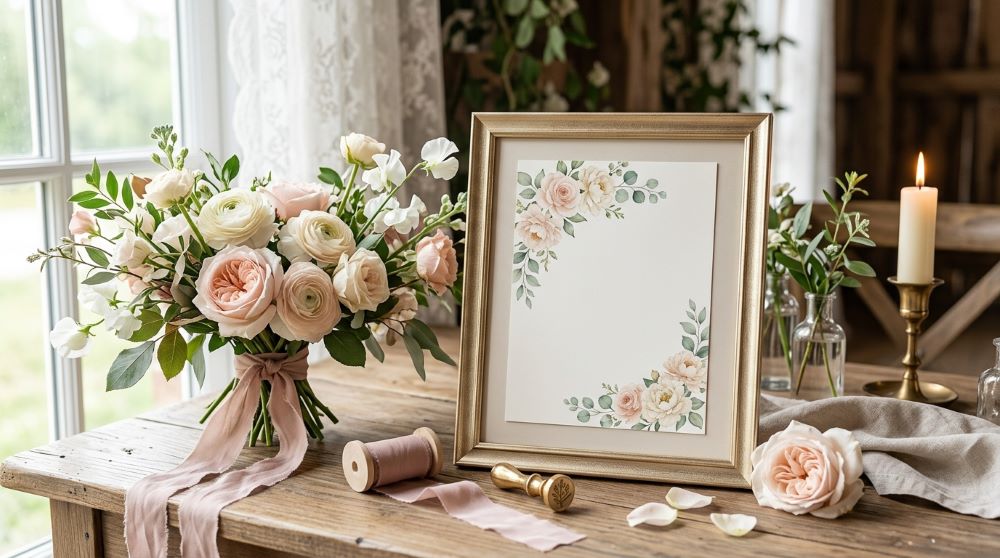
Warm metallics such as gold and champagne can work beautifully with blush, cream, peach, and warm neutral invitations. Silver and cool metallic finishes may suit blue, lavender, gray, or crisp white designs. Natural wood can add warmth to botanical, rustic, or outdoor-inspired invitations.
If your invitation already contains several colors, consider choosing a simple neutral frame so the overall display doesn’t feel too busy.
[Image Prompt] A realistic elegant wedding invitation displayed inside a sophisticated champagne-gold frame, ivory invitation card with delicate floral details, soft blush and cream wedding accents surrounding the frame, arranged on a refined tabletop with fresh flowers and silk ribbon, soft natural window light, high-end editorial photography, no text or words visible.
Consider the Material
The material of the frame can completely change the appearance of your invitation display. Wooden frames tend to feel warm and natural, while metal frames can create a more polished and sophisticated look. Acrylic and glass frames are excellent choices when you want the invitation itself to remain the visual focus.
For a romantic wedding, an ornate frame can add a decorative touch, especially when paired with a classic invitation. For a contemporary celebration, a sleek frame with clean edges can create a more modern appearance.
Choose the material based on the overall atmosphere you’re trying to create rather than simply choosing the most decorative option available.
Choose the Right Frame Size
Getting the size right is important because a frame that is too small can make the invitation feel cramped, while one that is excessively large may make the card look lost inside it.
Measure your invitation before shopping for a frame. If you want a traditional appearance, choose a frame that fits the card closely with a small border around it. For a more dramatic presentation, you can choose a larger frame and use a mat to create additional space around the invitation.
A generous mat can actually make a small invitation feel more luxurious. It gives the card room to breathe while creating a clean visual separation between the invitation and the frame.
Use a Mat for a Polished Look
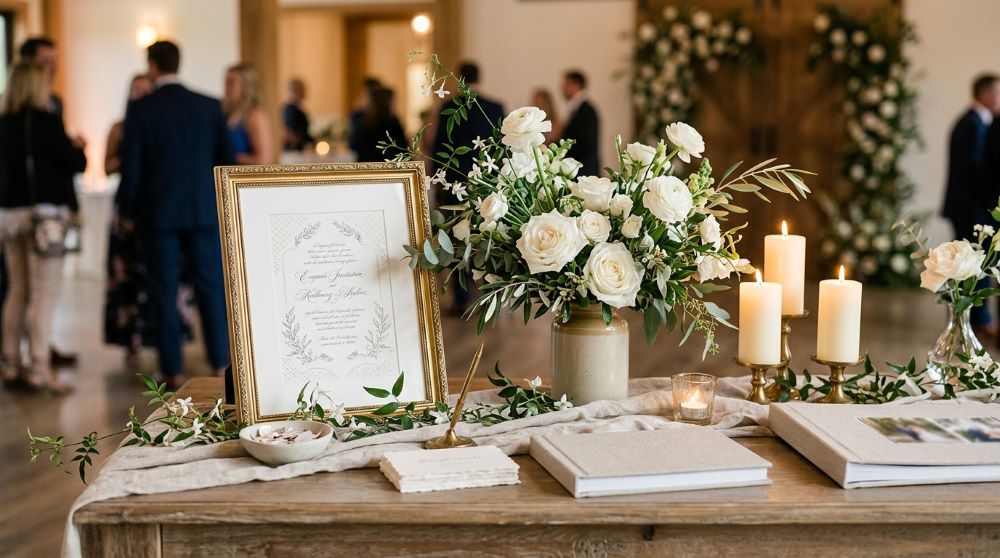
A mat is one of the easiest ways to make a framed wedding invitation look more professional. It creates a border around the invitation and can help connect the card with the frame.
White, ivory, cream, or soft neutral mats are versatile choices. If your invitation has a very simple design, you could use a subtle colored mat that picks up one of the smaller colors in the stationery.
Avoid choosing a mat that is too bold if the invitation already contains intricate patterns or illustrations. The purpose of the mat is to enhance the design, not compete with it.
[Image Prompt] A realistic close-up of a wedding invitation beautifully mounted inside a deep ivory mat and slim gold frame, elegant textured paper, subtle floral stationery details, neutral wedding décor, soft shadows and natural daylight, sophisticated high-end editorial photography, no text or readable words on the invitation.
Think About the Invitation’s Paper Texture
The texture of your invitation can also influence your frame choice. Thick handmade paper may look particularly beautiful in a natural wood frame, while smooth luxury cardstock can pair well with sleek metal or acrylic.
If your invitation includes raised details, embossing, foil accents, or textured printing, consider using a simple frame that allows those details to remain visible. An overly ornate frame may distract from the craftsmanship of the invitation itself.
The more detailed your card is, the more restrained your frame can be.
Choosing the right frame starts with finding a design that suits your celebration, so explore these wedding invitation cards for more beautiful ideas.
Choose Between Classic and Modern Frames
Your personal style should play a major role in the decision. Classic frames often feature decorative edges, traditional metallic finishes, or carved details. These can work wonderfully with formal wedding invitations.
Modern frames tend to have clean lines, simple borders, and minimal decoration. They are ideal for contemporary invitations with simple typography and understated color palettes.
There is no rule saying your frame has to follow a traditional wedding style. If your invitation is modern but your home décor is classic, you can choose a frame that connects the two styles through color or material.
Consider Where You’ll Display It

Think about where the framed invitation will actually be placed. If you’re displaying it at the wedding, consider the décor around it. The frame should coordinate with your welcome table, guest book table, dessert area, or other surrounding details.
If you’re planning to keep the framed invitation in your home afterward, choose something that works with your existing décor. A timeless frame can turn the invitation into a meaningful keepsake that you can display long after the wedding.
You can also choose a frame with a removable backing so the invitation can be taken out safely if you ever want to preserve or replace it.
[Image Prompt] A realistic wedding welcome table featuring a beautifully framed wedding invitation alongside fresh flowers, candles, neutral linen, delicate greenery and elegant reception décor, frame coordinating naturally with the stationery and surroundings, romantic soft lighting, high-end wedding photography, no text or readable words.
Don’t Overdecorate the Display
It can be tempting to add ribbons, flowers, pearls, charms, and other decorative elements around the framed invitation. However, too many details can make the display look cluttered.
If the frame itself is decorative, keep the surrounding décor simple. If you’ve chosen a minimalist frame, you can add a few flowers or small decorative objects around it.
The invitation should remain the focal point. Every additional element should support its design rather than hide it.
Protect Your Invitation
Since wedding invitations can become treasured keepsakes, protecting them should also be part of your frame selection. Look for a frame with glass or acrylic that keeps the card protected from dust and accidental damage.
Avoid placing the framed invitation somewhere that receives strong direct sunlight for long periods. Prolonged sunlight can cause paper and printed colors to fade over time.
If your invitation contains delicate materials or special embellishments, make sure the card is mounted securely without damaging the paper.
Want your invitations to make a lasting first impression? These stunning wedding invitations can inspire an elegant and eye-catching design.
Create a Coordinated Wedding Display

If you’re displaying several pieces of stationery together, such as the invitation, RSVP card, menu, or ceremony program, try to keep their frames visually connected. They don’t have to be identical, but repeating the same material, color, or finish can make the collection feel intentional.
For example, several slim gold frames can create a cohesive display, while a combination of natural wood and neutral frames can give a more relaxed, organic appearance.
This approach works especially well for a wedding memory table or a dedicated stationery display.
[Image Prompt] A realistic elegant stationery display featuring a framed wedding invitation, framed RSVP card and small wedding details arranged together on a sophisticated console table, coordinated slim gold and ivory frames, fresh white flowers, candles and subtle greenery, warm natural light, refined wedding décor photography, no text or readable words.
Final Thoughts
Choosing a wedding card frame doesn’t have to be complicated. Start with the invitation itself, then consider its colors, style, paper texture, size, and the place where you’ll display it. The best frame is one that enhances the invitation while allowing its most beautiful details to remain the focus.
Whether you choose a simple acrylic frame, a classic gold design, a natural wooden style, or something more decorative, make sure it reflects the feeling of your wedding.
Save this guide for later and use it when you’re ready to turn your beautiful wedding invitation into a keepsake you’ll treasure for years!
Complete your stationery suite with more thoughtful details by exploring these wedding signs, stationery & details for your big day.

Emma is the author and creative voice behind TheFashionary, sharing inspiring ideas on bridal fashion, wedding dresses, hairstyles, and timeless style. She loves discovering beautiful fashion trends and helping readers find inspiration for their special moments.