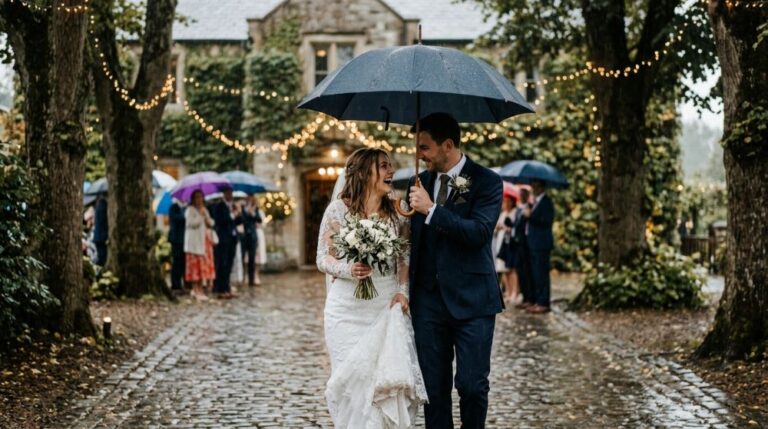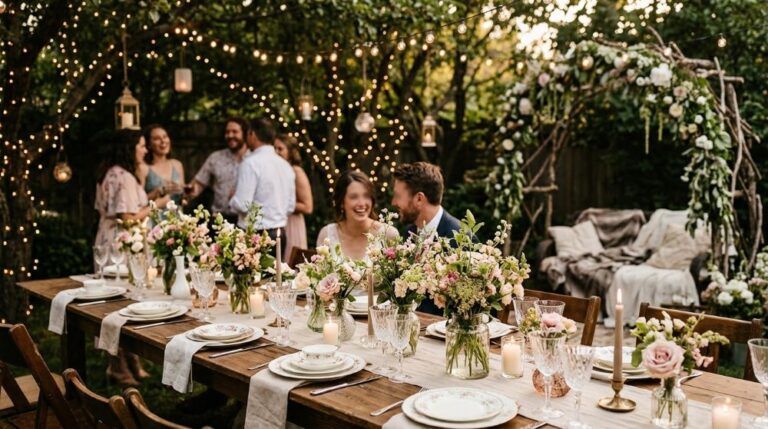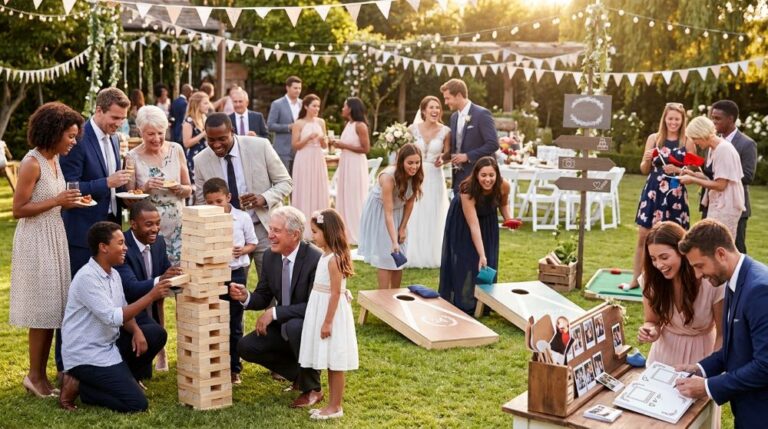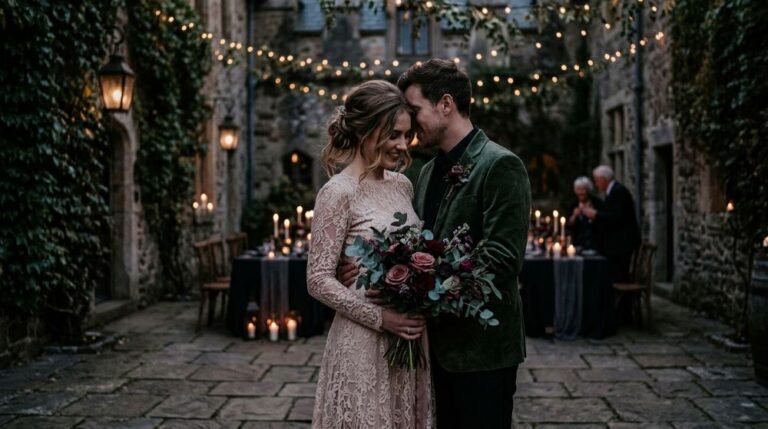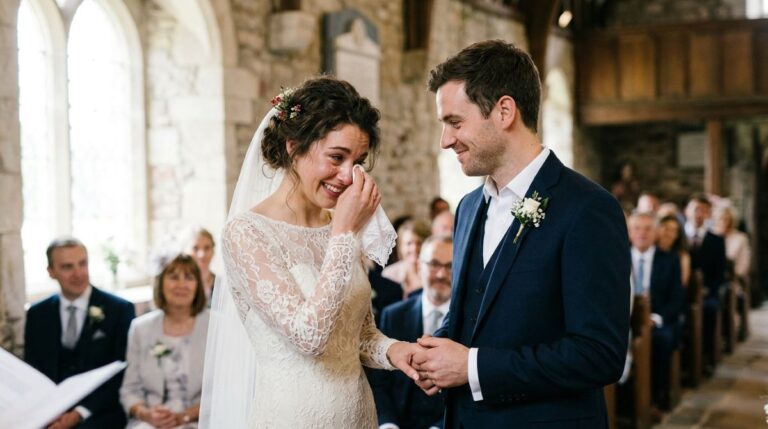
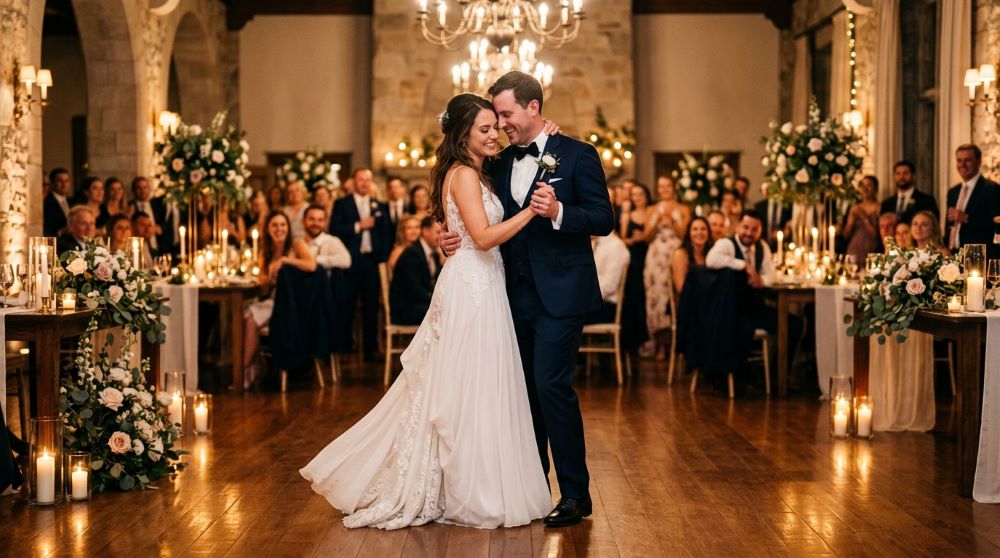
Your first dance can become one of the sweetest memories of your wedding day. You do not have to be a trained dancer or spend a fortune on lessons to make it special. From a slow romantic sway to a playful choreographed routine, there are plenty of wedding dance ideas for couples with different personalities and comfort levels. The right song, simple movements, and a little practice can create a beautiful moment that feels natural. Whether you want an intimate first dance, a fun surprise for your guests, or a classic ballroom-inspired performance, these ideas can help you choose a style that fits your celebration.
A Classic Slow Dance
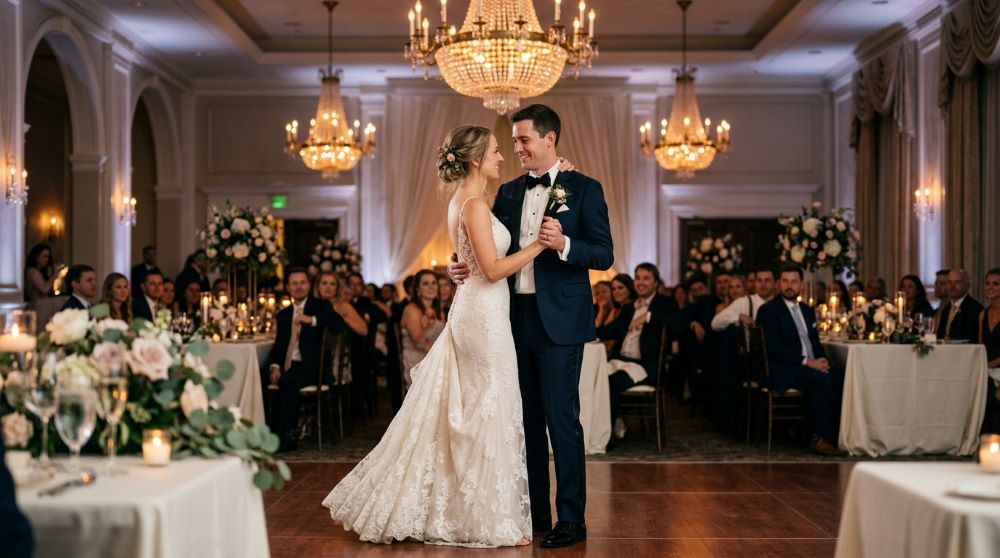
A classic slow dance is one of the easiest choices for couples who want a romantic first dance without complicated choreography. Choose a song that has personal meaning and lets you move comfortably. Hold each other close, sway gently, and let the music guide your pace.
You can add small movements without making the routine difficult. Turn slowly when the chorus begins. Take a few steps together toward one side of the floor. Pause for a gentle spin or simply smile at each other.
Practice the opening and ending several times at home. Those moments often matter most because everyone is watching when you begin and when you finish.
For a budget-friendly setup, you do not need professional lessons. Clear some space in your living room and practice with the same song you plan to use. Recording yourself on a phone can help you see whether your movements feel comfortable.
A classic slow dance works beautifully for ballroom weddings, garden celebrations, courthouse receptions, and small family gatherings.
A Simple Sway With a Romantic Song
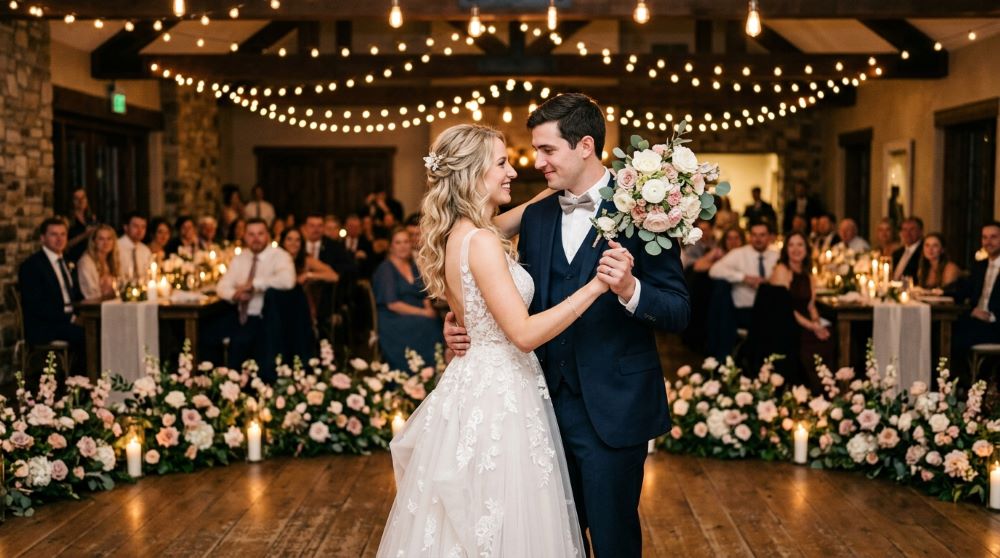
If formal dancing makes you uncomfortable, keep your first dance simple with a gentle sway. This style works especially well with a slow romantic song and lets the focus stay on the couple rather than complicated movements.
Start by standing close together. Move slowly from side to side with the rhythm. Every few counts, take two or three small steps in one direction before returning to the center.
You can add a slow turn when the music changes. A simple hand movement or small spin can also create variety.
The best part is that this approach requires almost no special equipment or training. Practice for ten minutes a few evenings before the wedding. Focus on staying together rather than trying to perform perfectly.
For a DIY touch, ask a trusted friend to record one practice session. Watch it together and decide which movements feel natural.
Choose a song with a comfortable tempo. Very fast songs can make a simple routine feel harder than expected.
This idea suits couples who want their first dance to feel private, relaxed, and emotionally meaningful.
A Short Choreographed Routine
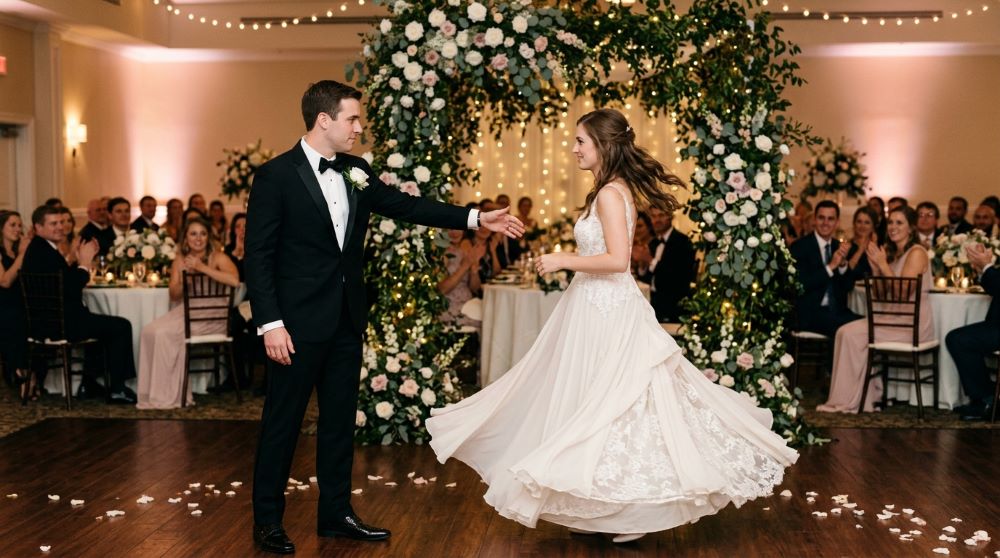
A short choreographed routine can make your first dance feel polished without turning it into a long performance. You only need a few planned movements that repeat naturally with the music.
Choose three or four sections of the song. Create one simple movement for each section. You might begin with a slow sway, add a turn during the chorus, walk together for a few counts, and finish with a dip or close embrace.
Keep the routine short. Around two to three minutes can be enough for a memorable performance.
If professional lessons are outside your budget, search for beginner dance tutorials and practice one movement at a time. You can also ask a dance-loving friend to help you build a simple routine.
Practice in the shoes you plan to wear whenever possible. Wedding gowns can also affect movement, especially around the feet.
Leave some room for natural interaction. A smile, laugh, or spontaneous hug can make the dance feel more personal.
The goal is not perfect choreography. It is creating a moment that looks comfortable and reflects your relationship.
A Romantic Twirl-Focused Dance
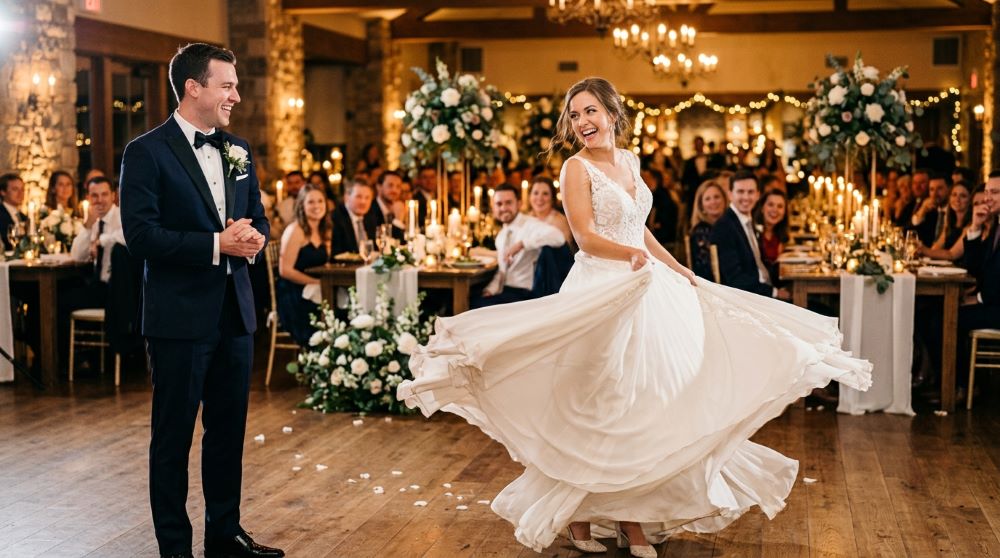
A few graceful twirls can make a first dance look beautiful in photographs. This idea works especially well when the bride or partner is wearing a flowing gown that moves naturally.
Begin with a simple slow rhythm. Hold hands and walk together for a few counts. Then guide one partner into a gentle turn. Return to the basic sway before repeating the movement.
Do not add too many spins. Two or three well-timed turns can create plenty of visual interest.
Practice the hand position slowly at home. The person leading the turn should use a light and comfortable motion rather than pulling the other partner around.
If your dress has a long train, ask someone to practice with you while wearing a similar-length skirt or robe. This can help you learn how much room you have.
You can also place your photographer at an angle where the movement of the dress is easy to capture.
This style works well for romantic garden weddings, elegant ballroom receptions, and celebrations with soft floral decor.
A Fun Surprise Dance
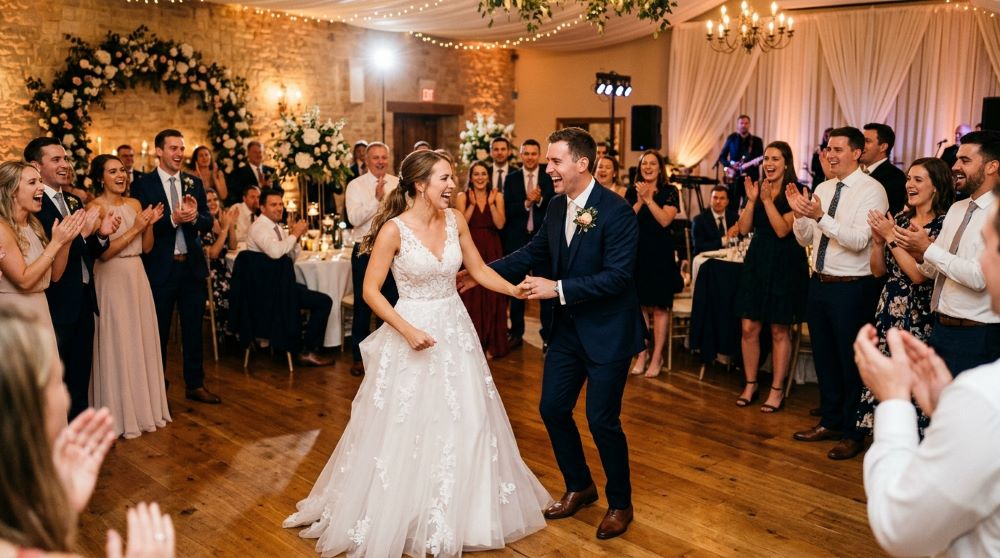
A surprise dance can turn the first-dance moment into a fun memory for everyone in the room. You can begin with a traditional slow dance before switching to a more upbeat song.
The change can happen after the first verse or chorus. Start with simple movements so guests think the entire dance will stay romantic and slow. Then move into a short routine with claps, side steps, spins, or playful gestures.
Choose movements that both partners can remember easily. Repeating the same eight-count pattern several times can make the routine much easier.
For a low-cost version, practice in your living room. Ask one or two friends to join if you want the surprise to become a small group routine.
Tell only the people who truly need to know. Your photographer and DJ may need advance information so they can capture the moment and play the correct music.
Keep the routine short enough that you finish while the energy is still high.
A surprise dance works particularly well for couples with playful personalities who want guests to laugh, clap, and join the celebration.
A Waltz-Inspired First Dance
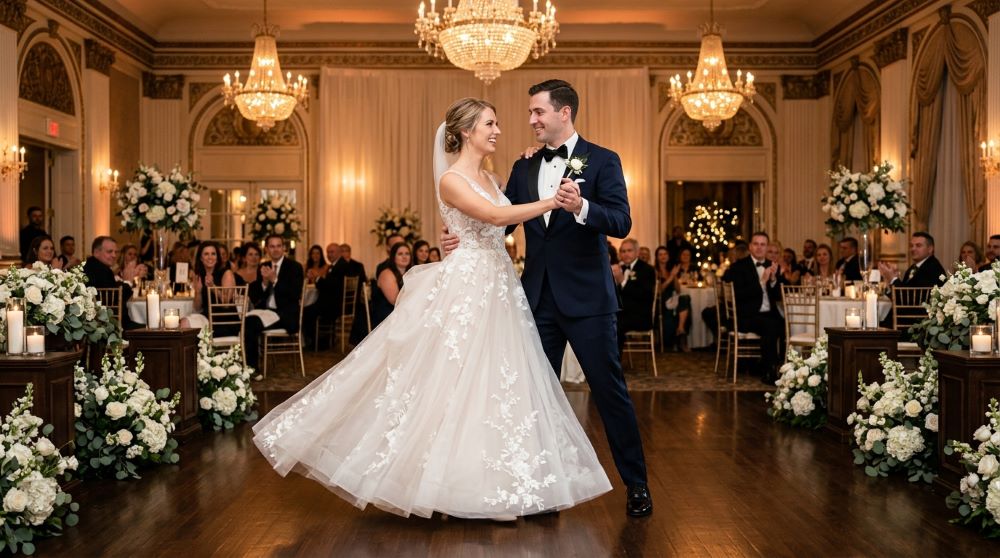
A waltz-inspired first dance gives your reception a timeless feel. You do not have to learn a full ballroom routine. A few basic steps can create the same graceful atmosphere.
Start with a simple three-count rhythm. Move forward and backward together while keeping your steps small. Once you feel comfortable, add a gentle turn.
Choose a song with a clear rhythm. Songs that are too fast can make beginner steps harder to follow.
Practice without your wedding shoes at first. Once the basic pattern feels natural, switch to your actual footwear.
If you have a friend who knows ballroom dancing, ask for a short lesson. Even one or two sessions can help you learn basic foot placement.
For a DIY rehearsal space, mark a small square on the floor with removable tape. Use it as your practice area and stay inside the shape while learning.
You can finish with a gentle turn, close embrace, or simple pose.
This idea suits couples who love traditional romance but still want a routine that feels manageable.
A Song-Medley Dance
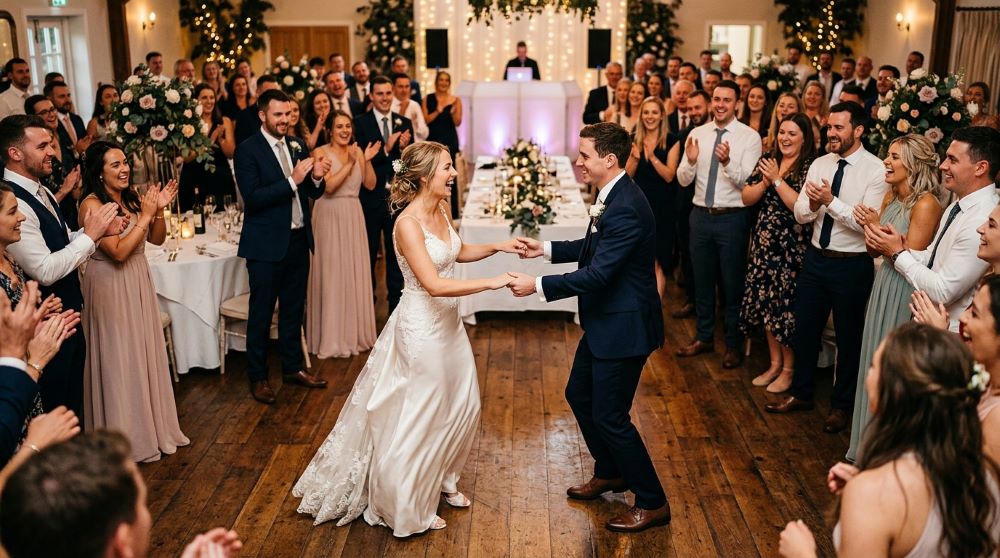
A song medley lets you combine different moods in one first dance. Start with a romantic track and then switch to something upbeat for a playful finish.
Pick two or three songs that have personal meaning. Keep each section short so the dance does not become too complicated.
For example, begin with a slow song for the first minute. Move into a cheerful track with simple side steps. Finish with a song that makes both of you want to dance freely.
Plan the exact points where the music changes. Give the DJ a single edited audio file if possible. This reduces confusion during the reception.
You can create a basic edit using free audio software or ask a musically skilled friend for help.
Practice the changes several times. The movement between songs should feel intentional. You can use a spin, hug, or pose as a natural pause.
This idea works well for couples who cannot choose only one favorite song.
It also gives guests different moments to enjoy while keeping the first dance personal and memorable.
A Gentle Dip at the Finale
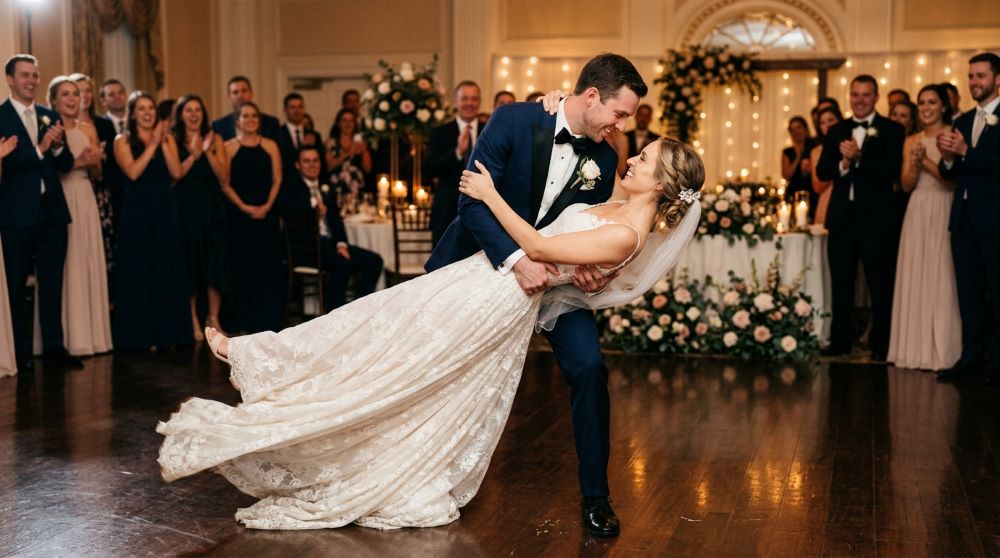
A gentle dip can create a beautiful ending for your first dance. It does not require a complicated routine, but it should be practiced carefully before the wedding.
Begin with a simple slow dance. Near the final chorus, move into position while holding each other securely. The partner supporting the dip should keep a stable stance and avoid sudden movements.
The dip does not have to be dramatic. A small lean can look elegant and feel much safer.
Practice on a clear floor without slippery rugs. Start with a shallow movement and only go farther if both partners feel comfortable.
Long dresses and trains can affect balance. Practice while wearing a similar-length garment before the wedding day.
If either partner feels unsure, replace the dip with a slow turn or close embrace. The ending can still look beautiful.
Tell your photographer when the final pose will happen. This gives them a chance to position themselves for the shot.
A simple dip works best as a finishing detail rather than the main focus of the dance.
A Country-Inspired Partner Dance
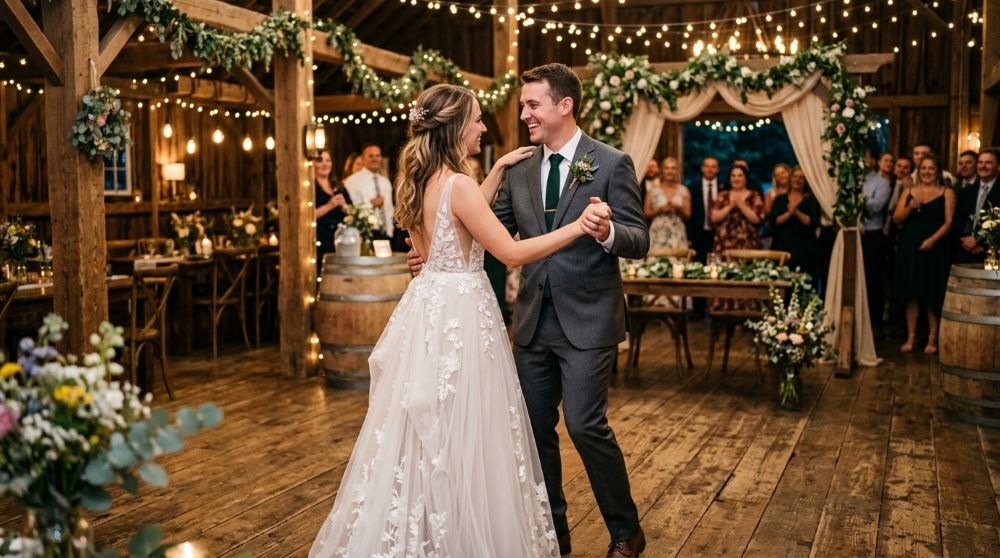
A country-inspired partner dance can bring a relaxed and cheerful feeling to your reception. It works especially well with rustic venues, barn weddings, outdoor celebrations, and country music.
You can keep the steps simple. Try side steps, gentle turns, small walking patterns, and a few playful spins.
Choose a song with a steady beat. A clear rhythm makes it easier for beginners to stay together.
Practice by counting quietly while you move. For example, use a repeated four- or eight-count pattern until both partners can follow it naturally.
You can create a DIY practice area outdoors or in a living room. Mark a small square with removable tape to help you stay oriented.
Boots can change your balance, so practice in similar footwear before the wedding.
For a personal detail, add a small movement inspired by something you regularly do together, such as a favorite walking route or a playful hand gesture.
The dance does not have to look like a professional country routine. A relaxed attitude and genuine smiles can make it feel authentic.
A Dance With a Cultural Touch
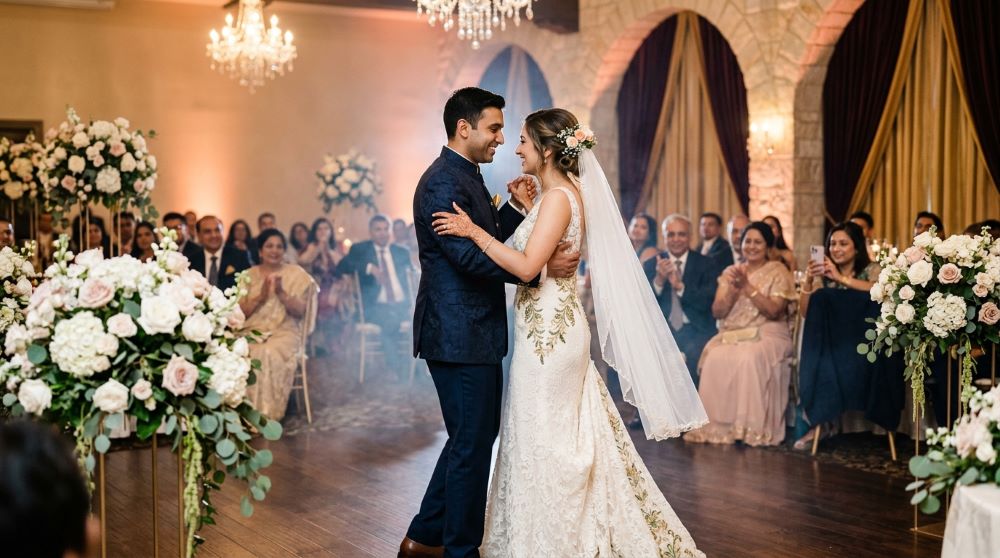
Adding a cultural dance style can make your first dance feel connected to family traditions. The exact movements can depend on your background, music, and wedding customs.
You might include a traditional hand gesture, rhythmic step, turn, or ceremonial movement. Keep the routine comfortable and choose elements that both partners can learn.
A family member may be able to teach you a few simple steps at no cost. You can also watch traditional performances for inspiration and adapt only beginner-friendly movements.
Practice slowly before adding music. Focus on posture, timing, and staying together.
If your outfits include traditional clothing, practice while wearing garments with similar movement and weight. Long skirts, jackets, scarves, or accessories can affect your range of motion.
You can also invite parents or grandparents to join for the final few seconds. This can create a meaningful family moment.
Tell your photographer about the cultural elements so they can capture the details respectfully.
This approach gives your first dance a personal connection while keeping the routine simple enough for a wedding reception.
A Fairy-Tale Inspired Dance
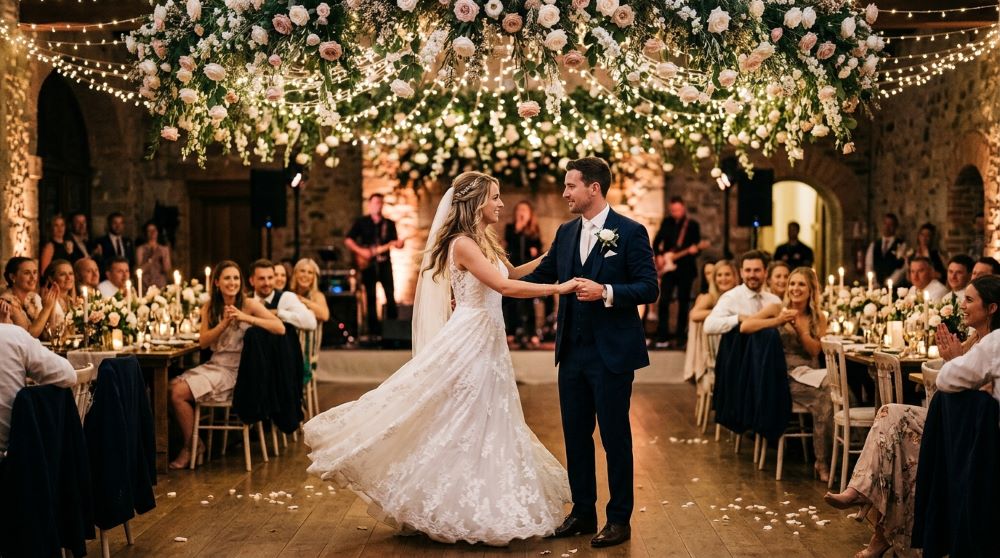
A fairy-tale-inspired first dance can create a dreamy atmosphere without requiring expensive production. The setting, music, and gentle movements can do most of the work.
Choose a romantic song with a soft opening. Start close together and move slowly across the dance floor. Add a few turns when the music grows.
Decor can help create the mood. String lights, candles, greenery, and affordable flowers can make a simple venue feel magical.
You can also create a DIY backdrop using sheer fabric and artificial flowers. Ask friends or family to help assemble it before guests arrive.
Keep the choreography graceful rather than complicated. A slow walk, hand turn, and gentle spin can create plenty of movement.
If your gown has a full skirt, allow enough space around you. Ask the venue to keep chairs and tables away from the dance floor.
For photographs, soft lighting can highlight movement and fabric beautifully.
This idea suits couples who want their first dance to feel romantic and dreamlike without spending heavily on entertainment.
A Playful Dance With Funny Moves
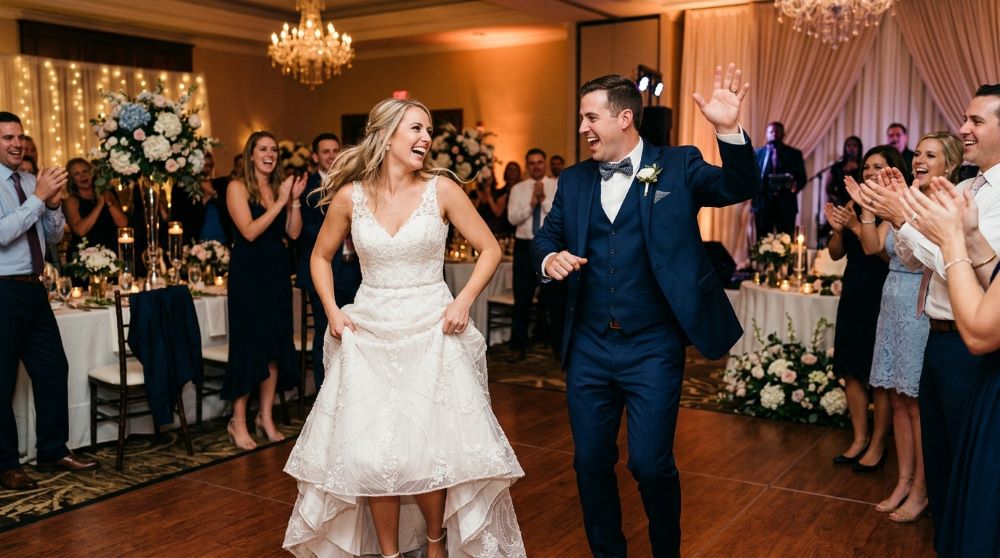
A playful first dance can show off your personalities. You do not have to take the routine seriously from beginning to end.
Start with a romantic song and add a few unexpected movements. Try synchronized side steps, playful pointing, exaggerated turns, or a funny pose.
The best movements are ones you already use when dancing together at home or parties. Familiar actions are easier to remember under wedding-day nerves.
Keep the funny section short. A few seconds can create laughter without taking over the entire dance.
You can even ask friends to secretly teach you one simple move to surprise your partner.
For a DIY routine, write the sequence on a small card during practice. Divide the song into sections and assign one movement to each section.
Avoid movements that could make either partner fall or damage clothing.
This style works especially well for couples who laugh together often and want their first dance to feel relaxed.
The goal is to create genuine reactions rather than perform a difficult routine.
A Dance Under String Lights
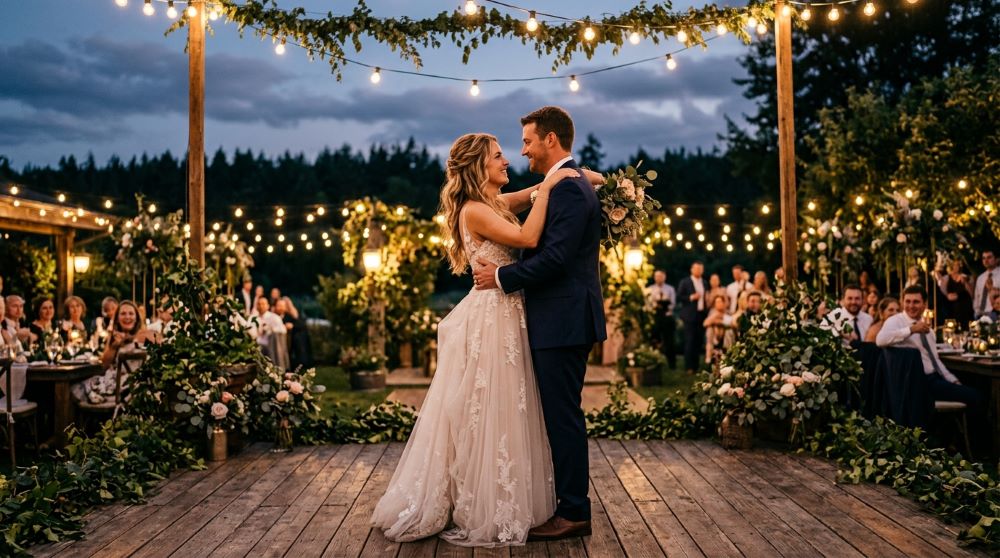
Outdoor string lights can create a beautiful setting for a simple first dance. You do not need complicated choreography when the surroundings already provide visual charm.
Choose a slow song and let the dance remain relaxed. Gentle swaying, small steps, and one or two turns can be enough.
If your venue has a lawn, patio, or courtyard, ask about creating a small dance area. A rented wooden floor can help if the ground is uneven.
For a budget option, use warm string lights around the perimeter instead of covering the entire venue.
Practice outdoors if your wedding will be outside. Wind, grass, and uneven surfaces can affect your movements.
Choose comfortable shoes with stable soles. If the venue allows it, some couples may prefer dancing barefoot on a suitable clean surface.
Ask your photographer to capture wide shots that show the lights and surrounding atmosphere.
This idea works particularly well for evening weddings with intimate guest lists.
The dance itself can stay simple while the lighting creates a romantic scene for photographs.
Conclusion
Your first dance does not have to involve difficult choreography, expensive lessons, or a professional performance. A simple sway, graceful twirl, playful routine, cultural movement, or guest-filled finale can all create a meaningful moment. Choose a song that feels personal, practice the basic movements, and leave room for genuine smiles and spontaneous reactions. The best wedding dance idea is one that feels comfortable for both of you. Start with a routine you can enjoy together, then add a few personal details that make the moment unmistakably yours.

Emma is the author and creative voice behind TheFashionary, sharing inspiring ideas on bridal fashion, wedding dresses, hairstyles, and timeless style. She loves discovering beautiful fashion trends and helping readers find inspiration for their special moments.