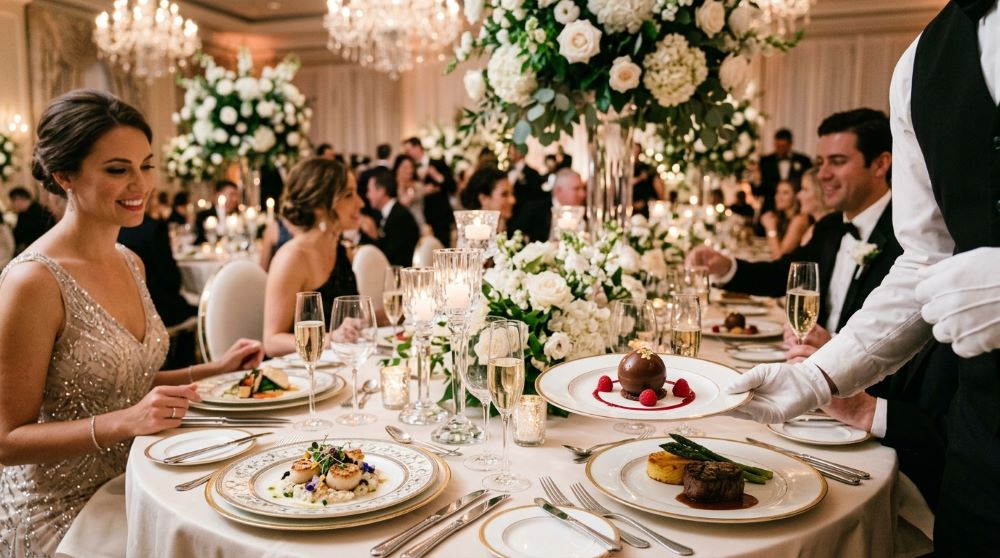
Your wedding menu is one of the things guests will talk about long after the last dance. It sets the mood, tells your story, and keeps everyone happy from cocktail hour to cake. You don’t need a massive budget to pull off a spread that feels genuinely special. With smart choices, creative presentation, and a few well-placed splurges, you can give your guests a dining experience that rivals any high-end restaurant. These ideas cover everything from passed appetizers to late-night snacks all designed to impress without overwhelming your budget or your planner.
Live Carving Stations That Command Attention
A live carving station turns dinner into a moment. There is something undeniably theatrical about watching a skilled chef slice through a perfectly roasted cut of meat right in front of your guests. It signals abundance and quality without saying a word. Whole roasted beef tenderloin, herb-crusted leg of lamb, or slow-roasted turkey are all crowd-pleasers that photograph beautifully. For a budget-friendly spin, opt for a pork loin or whole roasted chicken — both are far less expensive than beef but look just as impressive when styled well. Add a sauce station beside it with two or three options like chimichurri, horseradish cream, and red wine jus. This gives guests control over their plate and makes the experience feel more personal. A simple wooden cutting board, fresh rosemary sprigs, and a carved sign with the meat’s name go a long way toward making even a modest cut feel luxurious. Ask your caterer if a carving station can replace one plated course — it often costs the same but delivers a far stronger impression.
Oyster Bars on Ice for a Coastal Luxe Vibe
An oyster bar is one of the fastest ways to make a cocktail hour feel genuinely upscale. Guests circle it, chat over it, and remember it. The visual alone — glistening shells on a mountain of crushed ice — signals celebration. You don’t need to serve unlimited oysters to make it work. A limited oyster bar during the first 45 minutes of cocktail hour, with two or three varieties and classic accompaniments, hits all the right notes. Budget tip: pair with a few less expensive bivalves like clams or mussels to stretch the display. Ask your seafood vendor about “market grade” oysters — they taste identical to premium-labeled ones but cost less. Keep accompaniments simple: lemon wedges, a classic mignonette, and a splash of hot sauce. A hand-lettered card naming the oyster varieties (and their origin) makes even a modest selection feel thoughtful and curated. If raw shellfish doesn’t suit your crowd, a smoked fish display with blinis and crème fraîche gives the same luxury feel with broader appeal.
Grazing Tables Styled Like Edible Art
A grazing table is part food, part installation. Done well, it stops guests in their tracks before they even pick up a plate. The key is layering — height, color, and texture all working together. Start with three to five cheese varieties (one soft, one aged, one bold), add folded charcuterie, and build outward with fruit, nuts, crackers, and condiments. Fresh figs, blackberries, and honeycomb add visual drama at a low cost. To keep it budget-friendly, bulk out the table with affordable fillers: grapes, dried fruits, olives, and artisan bread are inexpensive but look rich. Avoid pre-slicing everything — whole wedges and uncut salami logs look more abundant and professional. Use mismatched wooden boards, slate tiles, and small ceramic bowls to create visual interest without spending extra. One pro tip: build the table in sections rather than scattering items randomly. Cluster like with like, then connect sections with trailing rosemary or ivy. This makes the whole thing look intentional and styled rather than just piled together.
Passed Canapés That Double as Conversation Starters
Passed canapés set the tone for the whole evening. When a tray floats by with something genuinely delicious and beautifully presented, guests immediately sense that this is going to be a good night. The trick is choosing three to five options max — enough variety to please different palates without overwhelming your kitchen or budget. Think about texture contrast: something creamy, something crispy, something with a little heat. Great budget-friendly canapé ideas include whipped ricotta on toasted baguette with roasted cherry tomato, smoked salmon cream cheese on cucumber rounds, and mini caprese skewers with fresh mozzarella. Presentation matters enormously here. A plain white ceramic spoon, a mini cast iron skillet, or a sleek slate board makes even simple food look intentional. Brief handwritten cards identifying each canapé are a small touch that adds polish. Timing matters too — make sure canapés start circulating within the first ten minutes of cocktail hour, before guests start hunting for food. Early, frequent passing keeps energy high and prevents the bar line from becoming the main event.
Taco or Tostada Bars with a Gourmet Spin
Tacos are universally loved, endlessly customizable, and much easier to scale than a plated dinner. The secret to making a taco bar feel luxurious is the quality and presentation of the toppings, not just the protein. Skip the standard sour cream and shredded cheese. Instead, offer pickled red onion, roasted tomatillo salsa, charred corn with cotija, fresh guacamole, and crema drizzled from a small squeeze bottle. For proteins, slow-braised short rib or adobo-marinated chicken thighs feel far more special than ground beef and cost only slightly more when bought in bulk. Handmade corn tortillas — either sourced locally or made on-site — make a bigger impression than store-bought flour ones. If your venue allows it, a small griddle station where tortillas are warmed to order adds a live cooking element that guests love. For a more upscale version, swap tacos for tostadas: a flat, crispy base topped tableside by a staff member. It feels composed and restaurant-quality without any extra complexity. Label each topping with small chalkboard cards for a clean, intentional look.
Sushi or Poke Stations with Fresh Presentation
A sushi or poke station brings a fresh, modern energy to wedding catering. It works beautifully for afternoon receptions, outdoor summer weddings, or couples who want a lighter alternative to heavy plated meals. Poke bowls are the more budget-conscious option — a base of seasoned rice or greens topped with diced ahi, edamame, pickled cucumber, and sesame dressing can be assembled quickly and scaled easily. For a higher-end feel, bring in a sushi chef for live rolling during cocktail hour. Even one hour of live sushi service creates a memorable experience guests rarely see at weddings. If a full sushi spread is outside your budget, consider a hybrid: pre-made rolls displayed on long wooden boards, with one or two premium items (like wagyu hand rolls) passed individually as a highlight moment. Keep the styling clean and minimal — white ceramics, bamboo accents, and simple garnishes. Avoid overcrowding the station. A well-spaced, edited display always looks more thoughtful than a jam-packed one. Pair with cold sake or yuzu lemonade for a cohesive, intentional experience.
Wood-Fired Pizza Ovens for Rustic Drama
Few things draw a crowd like a wood-fired pizza oven. The smell alone pulls guests across the venue. A mobile wood-fired oven at your reception — during cocktail hour or as a late-night station — gives you theatre, flavour, and flexibility all in one. Neapolitan-style pizzas with simple, quality toppings feel far more premium than anything loaded with ten ingredients. Think: San Marzano tomato with fresh buffalo mozzarella and basil, or a white pizza with truffle oil, arugula, and shaved parmesan. For budget control, limit the pizza station to a two-hour window rather than running it all evening. Many mobile pizza vendors offer flat-rate packages that include the oven, the chef, the dough, and a set number of pizza rounds — ask for exact per-head pricing versus hourly pricing and compare. If a mobile oven isn’t possible, partner with a local pizzeria to deliver par-baked pizzas that are finished on-site in a high-heat convection oven. The result won’t be identical, but with the right toppings and plating, it gets surprisingly close. Serve slices on parchment paper in small wire baskets for a clean, casual-luxe look.
Chilled Seafood Towers During Cocktail Hour
A seafood tower is pure visual spectacle. Even if guests don’t eat a single prawn, it tells them this wedding is doing something different. Strategically, a seafood tower works best as a centerpiece feature at cocktail hour rather than a full course — it creates wow factor without replacing a meal. A classic tower includes chilled prawns, snow crab legs, and fresh oysters. For a budget-conscious version, lean heavily on prawns (the most cost-effective shellfish) and supplement with smoked salmon pinwheels and pickled mussels. Skip the crab legs if the budget is tight — they’re expensive and awkward for guests to eat while standing. Presentation is everything here. A tiered silver stand with crushed ice does most of the work. Add fresh lemon halves cut into fans, small dipping bowls with cocktail sauce and remoulade, and a few sprigs of fresh dill or micro herbs for color. Ask your caterer if renting the tiered stand is included in their setup fee or whether it’s extra — sometimes sourcing it independently through a party rental company saves a noticeable amount. Stationed near the bar, a seafood tower becomes a natural social hub.
Interactive Pasta Stations Made to Order
A made-to-order pasta station combines comfort food with a live cooking experience guests genuinely enjoy watching. It’s interactive, it smells incredible, and it makes people feel taken care of. The key to making it feel upscale is the quality of the pasta and the finish, not the complexity of the sauce. Fresh egg pasta — tagliatelle, pappardelle, or rigatoni — cooked to order in individual portions feels infinitely more special than a buffet of pre-cooked pasta sitting in hotel pans. Offer two or three sauce bases: a classic cacio e pepe, a slow-cooked Bolognese, and a light brown butter with sage and parmesan. Keep add-ons simple — crispy pancetta, roasted garlic, wilted spinach. A tableside parmesan wheel finish (where the pasta is tossed inside a hollowed parmesan wheel) is a show-stopping upgrade that costs extra but photographs magnificently. Budget-friendly version: skip the parmesan wheel and serve in shallow wide bowls with a generous grating of quality parm and fresh cracked pepper. Small portions are fine here — this works best as a supplemental station or a cocktail-hour feature rather than the main course.
Signature Cocktail & Mocktail Pairing Menus
A curated cocktail menu is one of the simplest ways to make your wedding bar feel considered and personal. Instead of offering every spirit under the sun, focus on two or three signature drinks that reflect you as a couple — plus classic wine and beer. Give each drink a name that means something: the place you met, an inside joke, a favourite travel memory. Printed or hand-lettered menus on the bar immediately lift the whole experience. Mocktails deserve equal attention. A well-made mocktail with quality ingredients (fresh juice, herbs, quality sparkling water) makes non-drinking guests feel genuinely included rather than handed a glass of juice. Budget tip: batch your signature cocktails in advance in large pitchers or dispensers. This dramatically cuts bartender time during peak service and reduces the risk of long lines. Use seasonal, locally available fruit to keep ingredient costs low — strawberry basil in summer, pear rosemary in autumn. Garnishes go a long way: a dehydrated citrus wheel, a fresh herb sprig, or an edible flower costs almost nothing but transforms a basic drink into something worth photographing.
Cheese and Charcuterie Trolleys Rolled Tableside
A cheese trolley rolled tableside during dinner is a restaurant move that almost no wedding does — which is exactly why it works. Guests love the theatre of being presented options and choosing what gets plated in front of them. It also doubles as a natural conversation pause between courses. You don’t need a massive cheese selection to make it land. Four to five well-chosen cheeses — covering soft, semi-firm, aged, and blue — plus three charcuterie options is plenty. The trolley itself can be rented or sourced secondhand; a well-styled wooden bar cart or rustic trolley works just as well as anything purpose-built. Ask guests if they’d like a little or a generous portion — that small exchange between server and guest adds a personal, attentive touch. Pair the trolley with a printed card listing each cheese, its origin, and a one-line tasting note. This gives guests context and makes even an affordable cheese feel special when described well. Time it between the main course and dessert so it extends the evening naturally without adding a full extra course.
Dessert Bars Beyond the Wedding Cake
he wedding cake is no longer the only dessert option — and many couples are discovering that a curated dessert bar is both more fun and more affordable. A well-styled dessert table with eight to ten small options gives guests the experience of sampling something from every corner rather than eating a single slice of something they might not love. Think French macarons, miniature tarts, panna cotta in shot glasses, salted caramel bonbons, and bite-sized brownies. For a budget-conscious approach, focus on a few show-stopping items and fill the rest of the table with simpler, homemade options. Shortbread cookies, rice crispy treats dipped in chocolate, and fresh fruit skewers are inexpensive but look beautiful when plated thoughtfully. A dessert bar also solves the dietary restriction problem elegantly — include at least two gluten-free options and one or two dairy-free items, clearly labeled. Add small boxes or kraft paper bags so guests can pack extras to take home. This simple addition becomes a takeaway gift that costs almost nothing extra and sends guests home with a sweet memory of the day.
Late-Night Snack Stations That Surprise Everyone
Bringing out a late-night snack station after dancing has started is one of the most talked-about wedding moves of the last few years. Guests are hungry again, energy is high, and the surprise of food appearing later in the night always gets a reaction. Mini sliders, truffle fries in paper cones, grilled cheese triangles, or chicken and waffle bites all hit exactly the right note at this moment — fun, filling, nostalgic. The styling should feel slightly more casual than dinner: paper boats, small wooden boards, kraft paper cones. This contrast between the formal dinner setup and the relaxed late-night spread is part of the charm. Budget-friendly options include loaded nacho stations, hot dog bars with creative toppings, or a simple mac and cheese station with mix-ins. Even a basket of warm, salted soft pretzels with mustard feels genuinely exciting when it appears at 10pm after hours of dancing. Announce it: have your DJ or MC let guests know the snack station just opened. The collective reaction alone is worth it. Keep portions small so guests can snack without sitting down — you want them back on the dance floor, not parked at a table.
Global Street Food Stations for Adventurous Couples
A street food-style reception gives your wedding a distinct personality while serving a practical purpose: it feeds a crowd efficiently without a seated dinner format. This works especially well for outdoor, garden, or barn venues where a flowing, festival-style setup feels natural. Choose two or three global cuisines that genuinely excite you rather than trying to cover every corner of the world. A Vietnamese bánh mì station, a Japanese karaage chicken cart, and an Indian chaat counter make for a cohesive, exciting menu that flows well together. Each station should have its own visual identity — different serving vessels, signage, and styling. This makes the space feel designed rather than random. Budget tip: street food is often less expensive to produce than plated meals because many components can be prepped in advance and assembled quickly to order. Work with caterers who specialise in a particular cuisine rather than generalist caterers attempting to stretch. Authentic technique matters more than expensive ingredients here. Add printed mini “passport” cards at each station explaining the dish’s origin — it becomes an educational moment guests actually enjoy reading.
Farm-to-Table Menus Rooted in Season and Place
A farm-to-table menu is about more than using seasonal vegetables — it’s about telling a story through food. When guests read that the tomatoes came from a farm 20 miles away, or that the honey used in the dressing is from local hives, the meal means something more. It also happens to be a genuinely budget-smart approach. Seasonal, local produce is almost always less expensive than out-of-season imports, and when you let the season guide the menu, you naturally work with ingredients at peak flavour. Work with your caterer to build the menu around what will be at its best on your wedding date rather than locking in a menu months in advance. Ask for the names of their produce suppliers and request that they be featured on your printed menu. Guests notice and appreciate this transparency. For a DIY element, source a small selection of local jams, honey, or flavoured salts as table favours — placed beside each place setting, they tie the farm-to-table story together as something guests can take home. A handwritten note with the farm’s name and a single sentence about the product makes it personal without adding cost.
Conclusion
Great wedding food doesn’t come from an unlimited budget — it comes from thoughtful choices, honest flavours, and presentation that makes guests feel genuinely cared for. The ideas above aren’t about showing off. They’re about creating moments: the gasp when the cheese tower appears, the smell of a wood-fired crust, the surprise of a late-night slider at 10pm. Pick two or three ideas that feel true to who you are as a couple and build your menu around them. Talk openly with your caterer about what’s possible within your budget — most experienced catering teams have creative solutions they haven’t offered because no one has asked. Take the concepts that excite you, adapt them to your venue, your season, and your guest list, and don’t be afraid to simplify. A shorter, excellent menu will always outperform a long, average one. Your guests are there to celebrate you — and a table set with love, intention, and something genuinely delicious is the best way to honour that.

Emma is the author and creative voice behind TheFashionary, sharing inspiring ideas on bridal fashion, wedding dresses, hairstyles, and timeless style. She loves discovering beautiful fashion trends and helping readers find inspiration for their special moments.